On this page
Quick Recap
- UGC means user-generated content, which is any content about a product made by customers or users rather than the brand, and in ads the term now also covers "UGC-style" videos that brands pay creators to make.
- UGC works because shoppers trust people like them more than a brand, and a real hand using the product answers the buyer's main question, "does it work?", in a few seconds.
- A UGC ad is a paid ad built from that content, usually a vertical phone video, and it can run from the brand's account or from the creator's account through TikTok Spark Ads or Meta partnership ads.
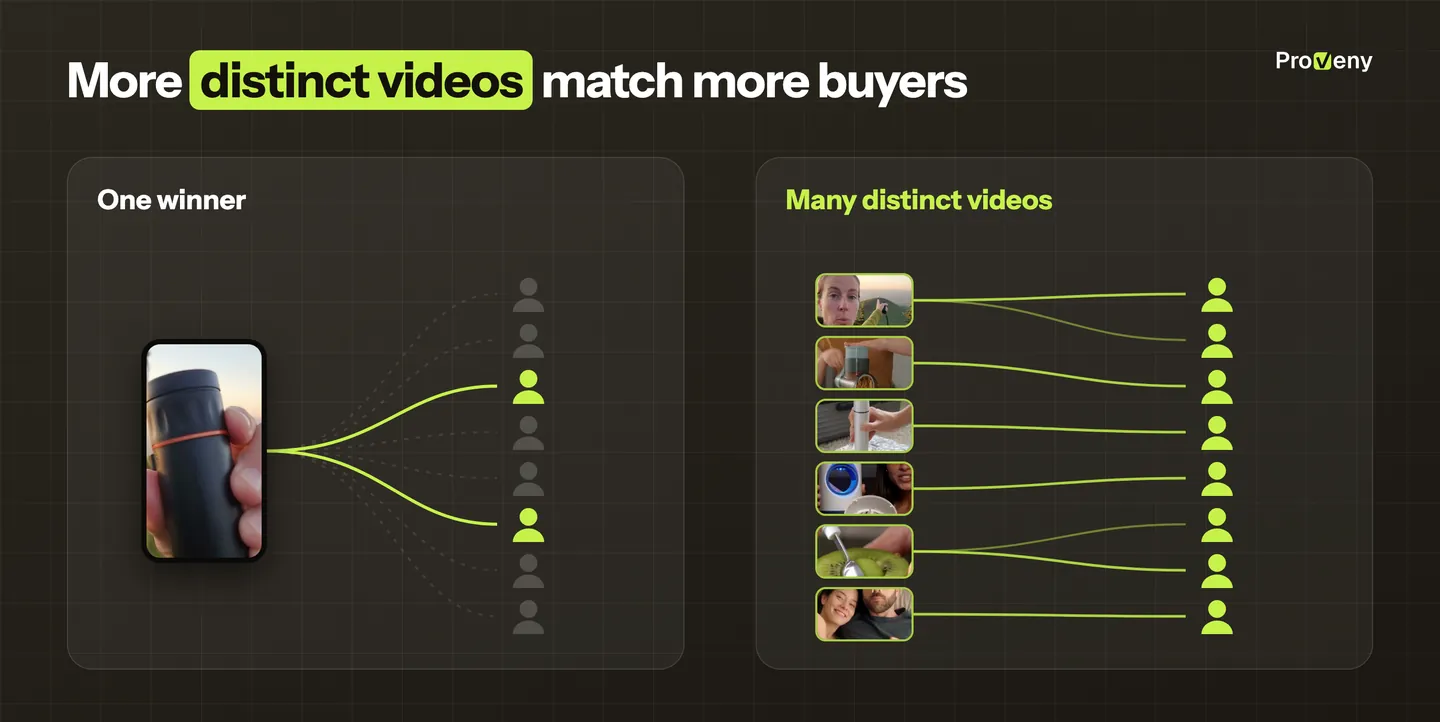
- UGC ads still work in 2027, but one good video is no longer enough, because Meta's ad system rewards many different creatives and both Meta and TikTok now label AI-made ads.
- The UGC formats that sell physical products keep the product on screen, from first use to before and after, and testing many angles with AI-made videos before paying creators to remake the winners keeps the cost of each test low.
What UGC Means in Marketing
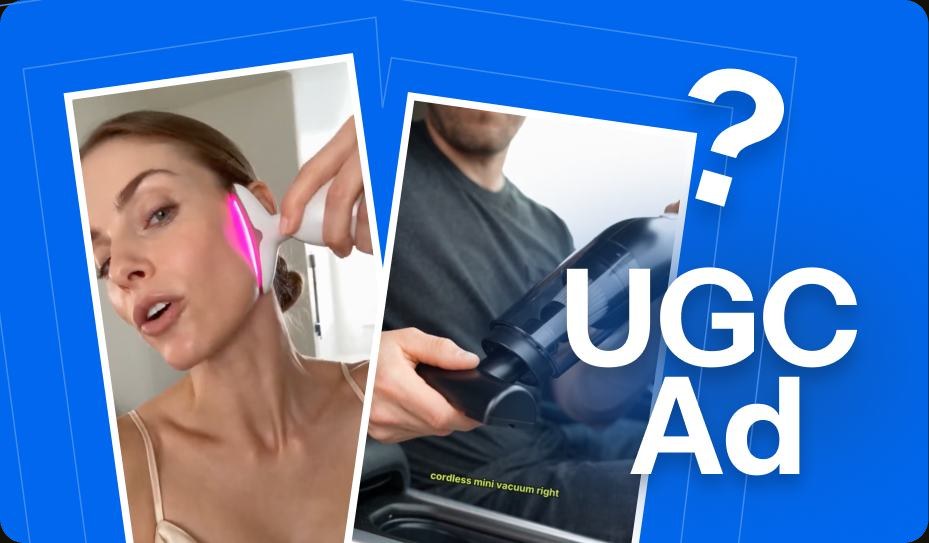
UGC stands for user-generated content. It is content about a brand or product that a customer, fan or user creates, instead of content the brand's own team makes.
- Organic UGC is the original meaning: a customer posts an unboxing, leaves a review with a photo, or tags your brand without being asked or paid. Nobody scripted it, which is why other shoppers believe it.
- Paid UGC is what most marketers mean today. A brand hires a UGC creator to film a video that looks like a customer made it, then licenses that video for its own channels.
- UGC-style content describes the look, not who made it. A UGC-style video is shot on a phone, vertically, with natural light and a person talking straight to the camera, even when a brand or an AI tool produced it.
The most common types of UGC for product brands are:
- Reviews and ratings: stars and written reviews on a product page or listing.
- Photos and videos from buyers: unboxings, first use, and before and after clips.
- Social posts and tags: posts and stories where customers tag the brand.
- Questions and answers: buyers answering other buyers' questions.
For an ad, the type matters less than the proof. A buyer's video of the product in use does more than a star rating, because it shows what the rating only claims.
Why UGC Works for Ecommerce Sellers
UGC works because it removes the doubt a shopper has about a product they cannot touch. Three things make it stronger than a polished brand video for most physical products.
A real voice beats a brand voice. Shoppers trust people like them more than a company. PowerReviews found in its 2025 survey of more than 21,000 US shoppers that 91% are more likely to buy when reviews include photos or videos, as Shopify reports.
The product in real use answers the main question. A buyer who has never seen your product wants to know whether it works. A close-up of a hand using it answers that in a few seconds.
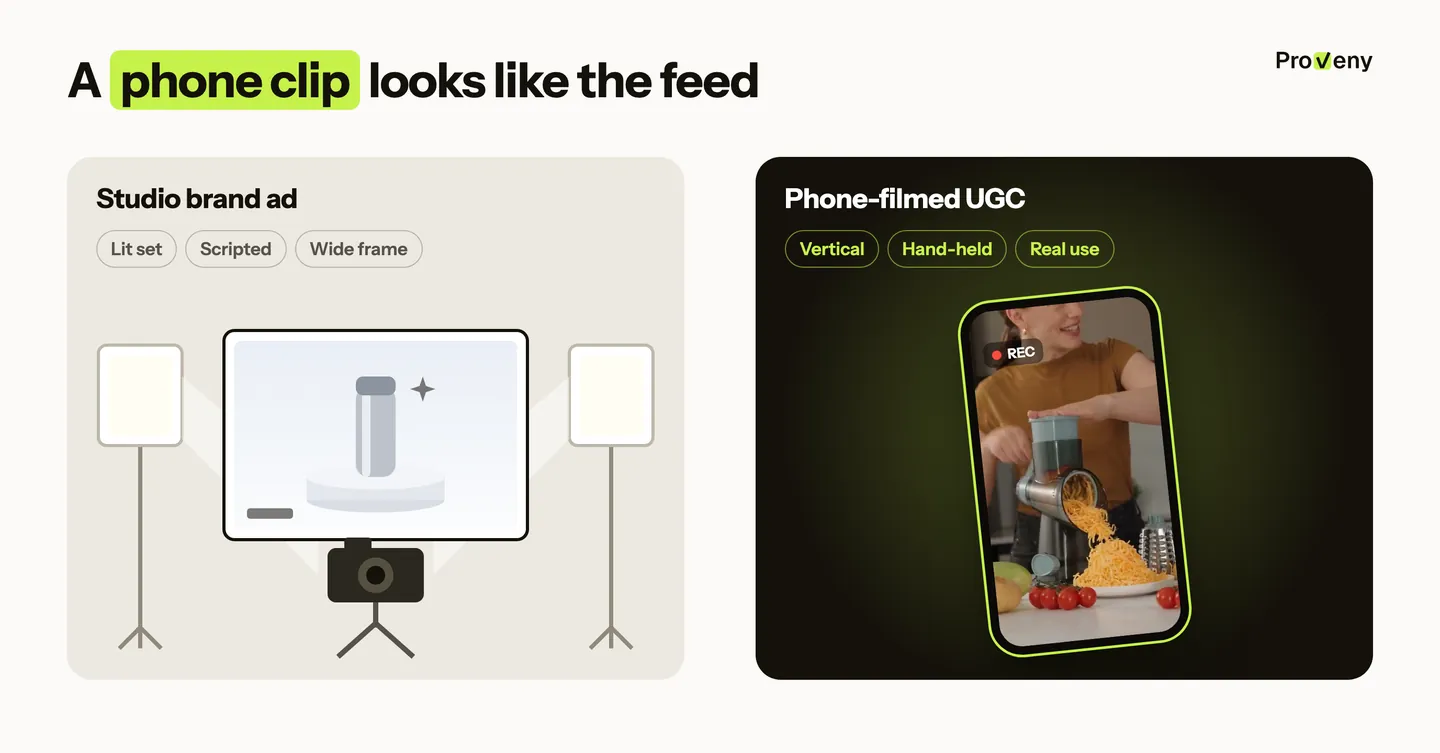
It fits the feed. On TikTok, Instagram and Facebook Reels, a phone video looks like the posts around it, so people watch the first seconds as content.
Do UGC Ads Still Work in 2027?
Yes, UGC ads still work in 2027, but the way brands create and use them is evolving. Simply putting an AI avatar or creator in front of a camera, reading a product script, and calling it UGC isn't enough to win attention anymore.
Audiences are seeing more creator-style ads than ever. Generic testimonials, predictable hooks, and videos that show products without demonstrating their actual value are becoming easier to scroll past.
For ecommerce brands and media buyers, the opportunity is to make UGC-style ads more engaging, not just produce more of them. Three elements matter:
- Authentic storytelling: Build ads around relatable problems, personal experiences, and natural conversations rather than overly promotional scripts.
- Visual product demonstrations: Show what a product actually does, how it works, and why someone would need it. This is especially important for products whose value is difficult to communicate through static shots or talking-head videos.
- Creative variety: Experiment with different hooks, scenarios, creator styles, and product angles instead of repeatedly recycling the same winning concept.
This is also where AI video generation helps. AI tools that start from the product, not from an AI presenter, let you change the hook, the person and the setting while the product is still shown working. That makes it easier to test different creative directions without a new filming session for each one. The section on making UGC ads without filming below shows how we do this with Proveny.
The bottom line: UGC isn't dead. Generic UGC is losing its ability to stand out. In 2027, the focus should be on creating ads that feel relatable, show products convincingly, and give audiences a reason to stop scrolling.
UGC Formats That Show the Product Working
The UGC ads that sell physical products usually show the product doing its job, not only a person talking about it. Five formats come up again and again in the Meta Ad Library, and each one below comes with a real ad that uses it.


Drama, UGC or demo ads. Any concept, any product.
Every ad shows your product working accurately.
1. Unboxing or First Use
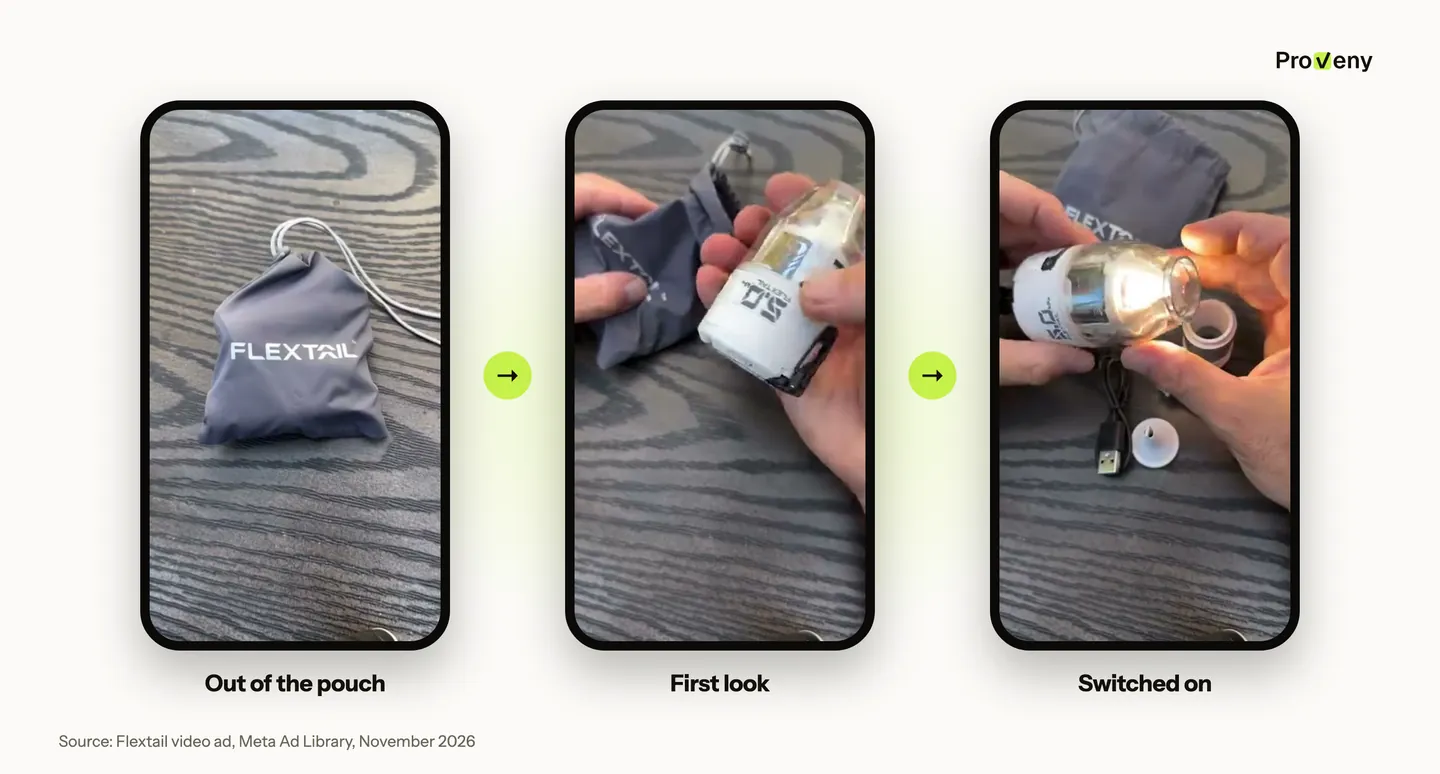
A user opens the product and tries it for the first time, so the viewer shares the surprise. In Flextail's ad, a creator takes the Max Pump 3 out of its pouch, shows what comes in the box and switches it on within seconds. This format fits products with a satisfying first moment, like a gadget that lights up or packaging that feels premium.
2. Hands-On Demo
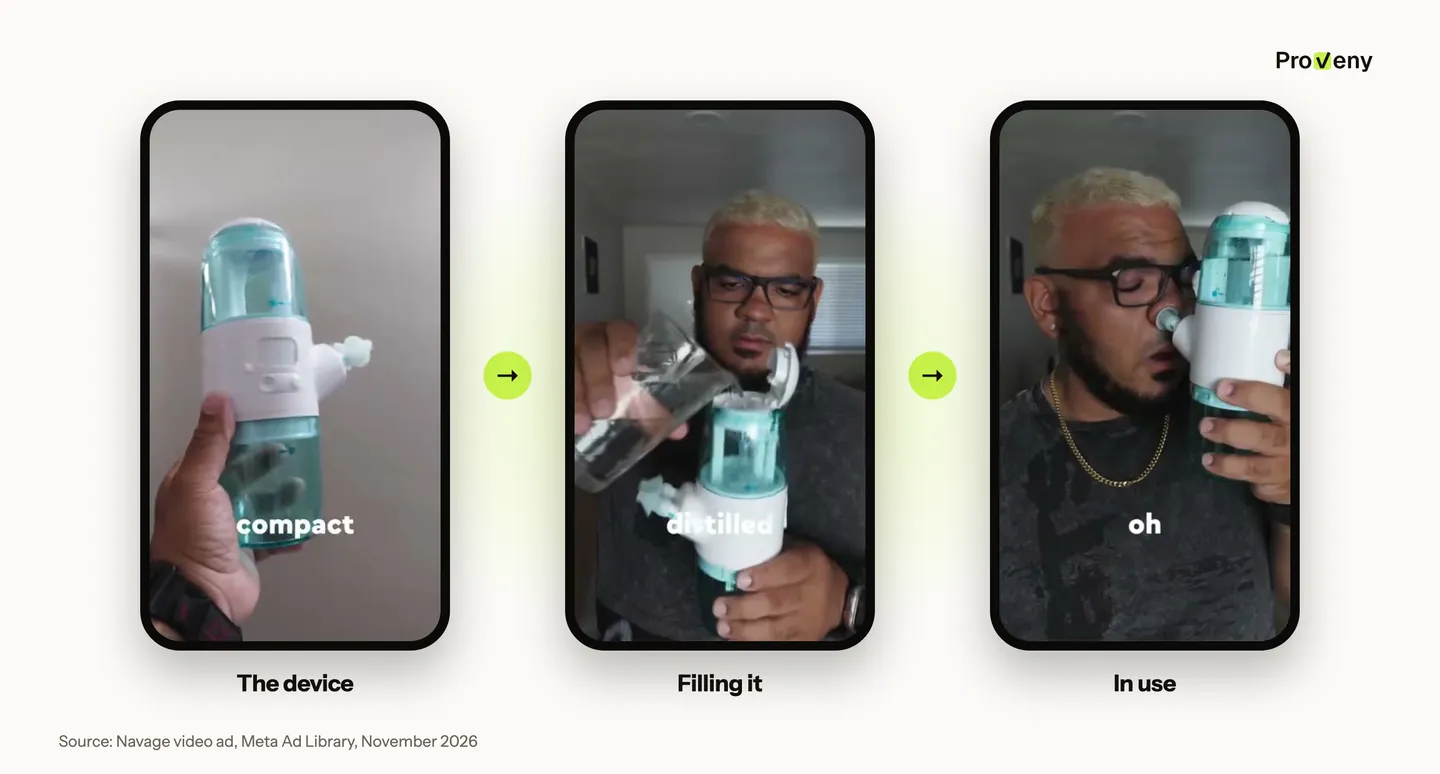
The product does its one main job, close up, in a real place. Navage's ad shows the nasal cleaner, fills it with water and then uses it on camera, with one word of caption per step. A demo answers what a photo cannot, which is what using the product actually looks like, so it suits new or unusual products that buyers cannot picture in their routine.
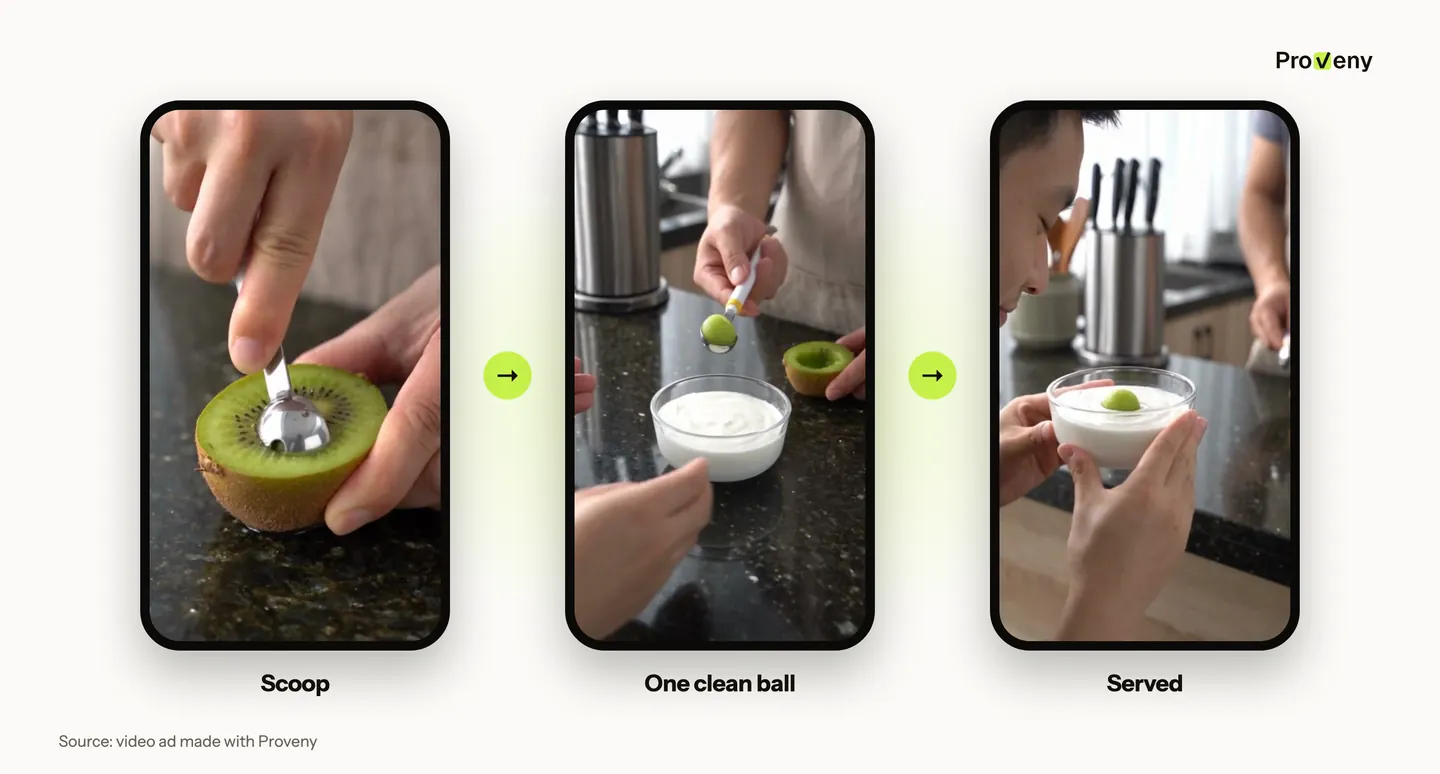
An AI-made demo follows the same pattern. In a melon baller ad made with Proveny, the tool scoops into a kiwi in close-up, lifts out one clean ball and drops it into a bowl of yogurt, all within 15 seconds.
3. Problem to Solution
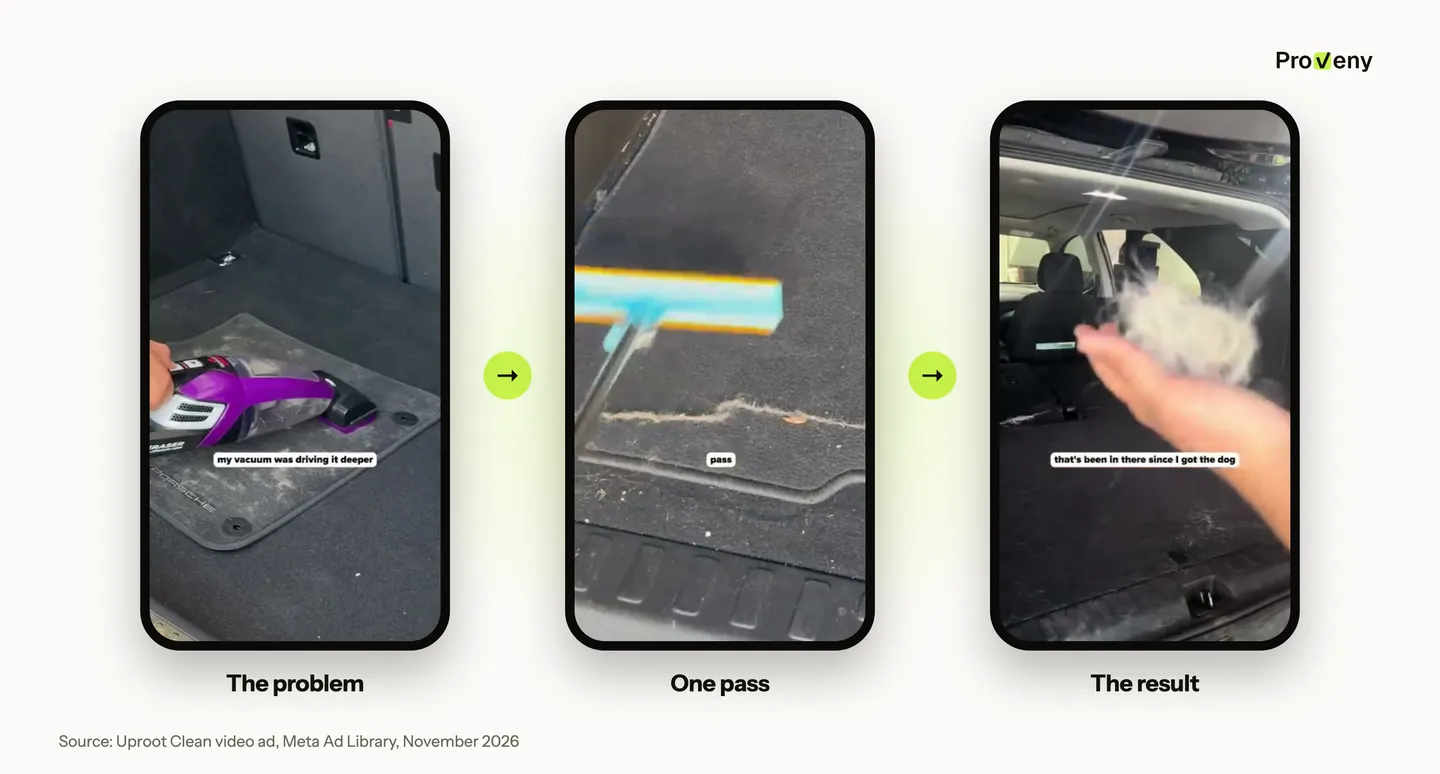
The problem fills the first three seconds, then the product fixes it. Uproot Clean opens on a handheld vacuum that only pushes pet hair deeper into a car mat, then pulls the fur out with its own tool in one pass. Viewers with the same problem stop scrolling at the first shot, but the fix has to look clearly better, not just different.
4. Testimonial
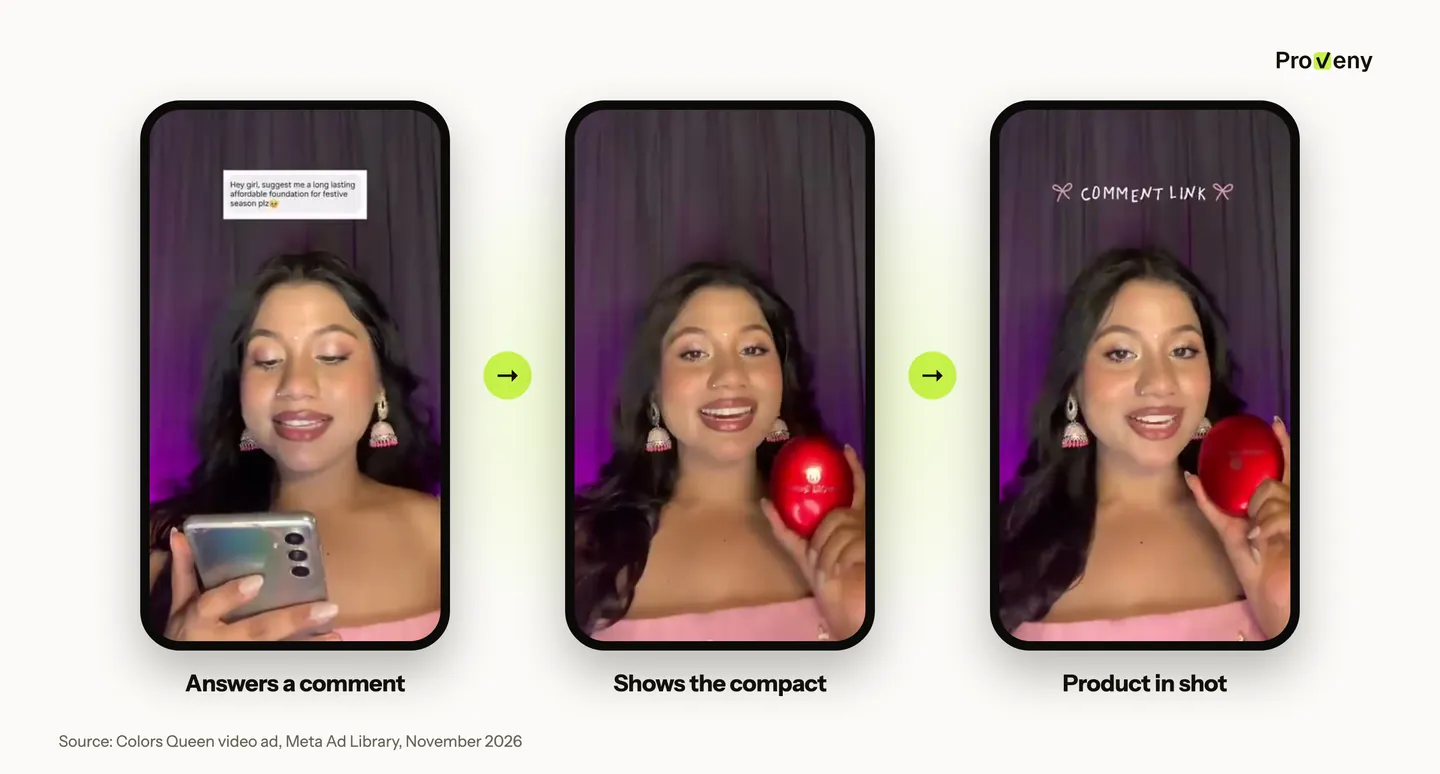
A user says what changed for them, with the product in the shot the whole time. In the Colors Queen ad, a creator answers a viewer's comment and then reviews the cushion foundation with the compact in her hand. A testimonial without the product on screen is just a person talking; keeping it in hand ties every claim to the thing being sold.
5. Before and After
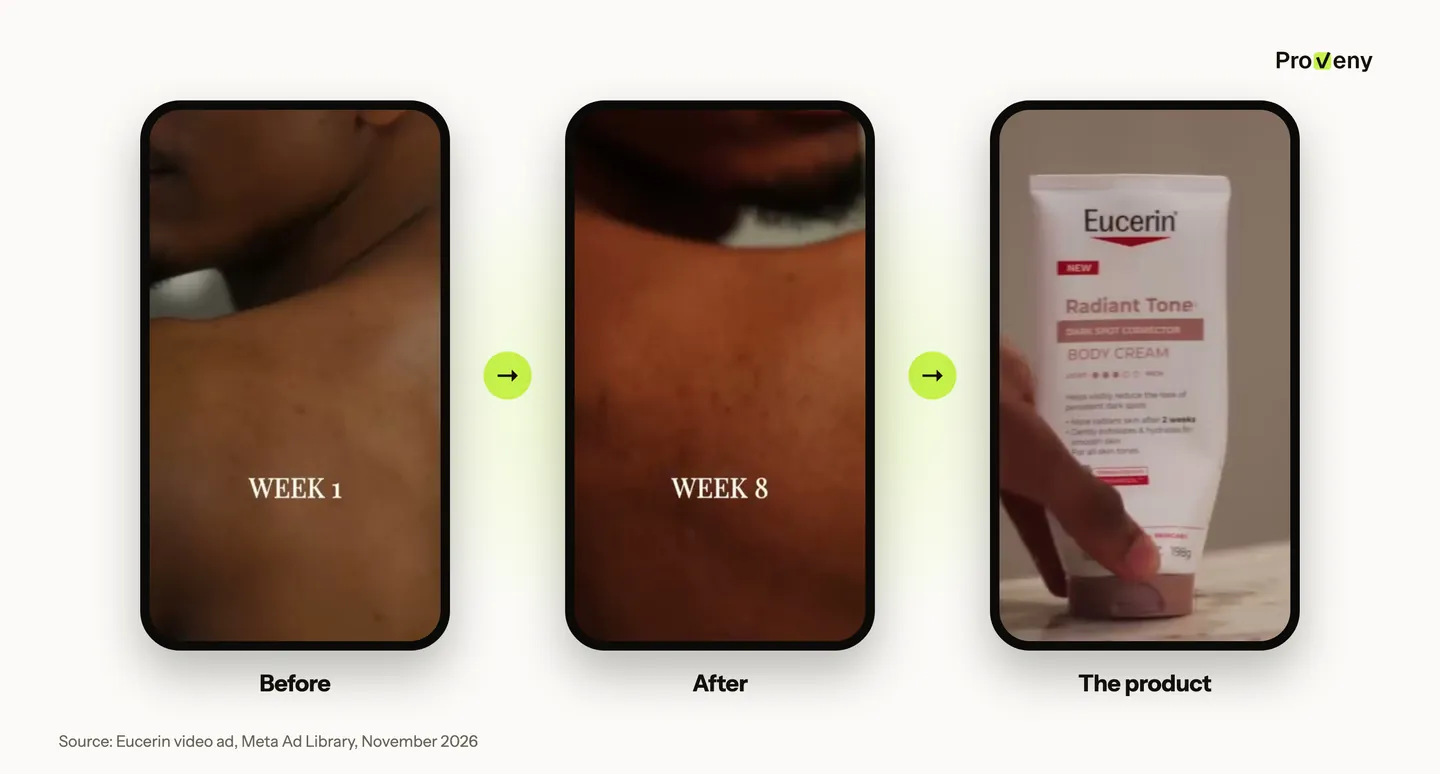
The same scene appears without the product and then with it. Eucerin's ad cuts between the same patch of skin at week 1 and week 8 of a user's routine with its Radiant Tone body cream. The two shots need the same angle and light, or viewers suspect editing, and Meta's ad policies limit before-and-after images for weight loss and some health products, so those rules are worth checking first.
The format matters more than the person in it: a demo that works usually works again with a new hook. We collected real ads in each format in our guide to UGC ad examples, and the product demo video guide goes deeper on the demo format. For ads made with AI from a product link, see our AI video ad examples. Proveny's swipe file ads extension, free in Chrome, saves video ads in each format from the Meta Ad Library, Facebook, Instagram and TikTok, and keeps a Meta ad's copy and landing page with the video.
UGC vs Influencer Marketing, and What Each Costs
UGC and influencer marketing both use real people, but they buy different things. With UGC, you pay for the content and post it yourself; with influencer marketing, you pay for the person's audience.
| UGC creator | Influencer | AI-made UGC | |
|---|---|---|---|
| What you pay for | The video and the right to use it | Reach to their audience | The tool and the time to review videos |
| Followers needed | No | Yes | No |
| Typical cost per video | About $150 to $500 before usage rights (Billo, 2026) | Depends on audience size | A subscription or credits |
| Time to first video | Days to a few weeks | Weeks | Minutes to an hour |
| Best for | Proven angles, testimonials, winners | Launches and brand awareness | Testing many angles and products |
For most product sellers, the cost that hurts is not one video but the number of videos testing needs. That is why many media buyers mix the two: they test many angles with AI-made UGC, then pay real creators to remake the winners. An ad creative analysis tool shows which ones those are. When a winner starts to tire, our ad fatigue guide covers the signs and the fixes.
How to Make UGC Video Ads Without Filming
The formats above have one thing in common: the product has to be shown working. That is the part most sellers struggle with, because a demo needs the product in hand, a person and an editor, and most AI tools start from one product photo and either freeze the product or invent details it does not have.
Testing makes it harder still. Meta Andromeda, the system that picks which ads each person sees, now reads the ad itself to find the people likely to respond, and Meta advises advertisers to run truly different ads, not small edits of one ad. Four ads with four faces and one script tend to reach the same people. Four different formats of one product give you four real chances to find new buyers.
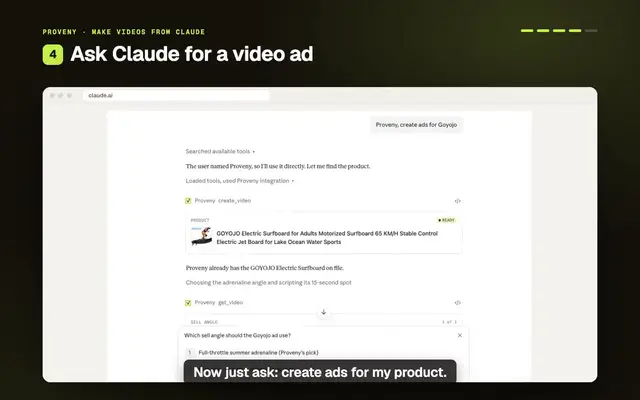
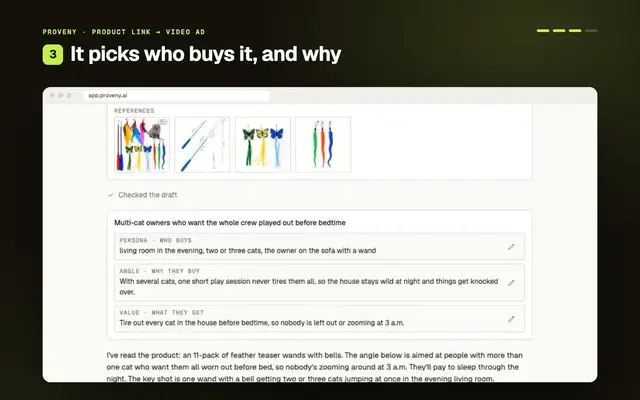
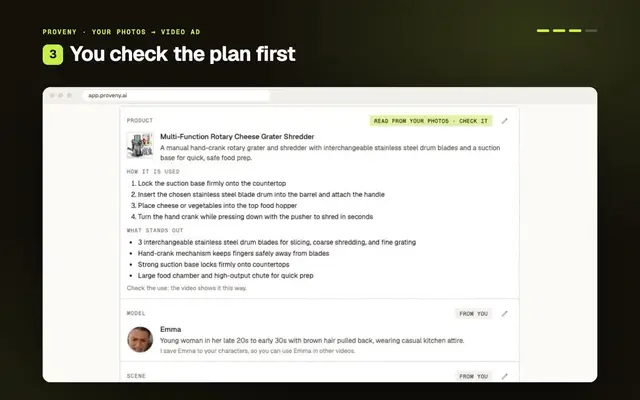
We built Proveny for exactly this: many different ads of one product, each one showing it working. You paste a product link or upload product photos, with no prompt to write, and Proveny studies what the product looks like, how it is used and what problem it solves.
It then suggests angles and a script you can change, and makes a 15-second to 10-minute video ad that shows the product in use. Because it starts from the product, not from an AI presenter, one product can become a demo, a testimonial and a problem-to-solution ad that Meta reads as different ads.
Three parts of Proveny matter most for UGC ads:
- UGC formats built around the product: UGC testimonial, hands-on demo, problem to solution, before and after and reaction hook, made to look shot on a phone, where the person is there to use the product, not to stand next to it.
- Approval before anything renders: you see the angle and script first, so you can turn one product into several different UGC ads to test instead of several copies of one.


Drama, UGC or demo ads. Any concept, any product.
Every ad shows your product working accurately.
Final Thoughts
UGC started as content customers made on their own, and in marketing it now also covers videos that look and feel that way, whether a creator or an AI tool made them. The reason it works has not changed: shoppers trust people like them, and they want to see the product in real use.
When UGC becomes an ad, the way it runs decides what you need: rights to the video for your brand account, a code or permission from the creator for Spark Ads and partnership ads, and a label when AI made it. What changed by 2027 is volume, because Meta's system rewards many distinct videos over one winner.
The sellers who get the most from UGC treat it as a testing system rather than a single video. They try many formats and hooks, keep what sells, and spend more on the angles that have already proven themselves. The next decision is which of the five formats to test first for your product, and how many angles each one gets.
 HC
Written by
Founder of Proveny & TrueProfit
Harry Chu has spent 11 years in eCommerce doing the work behind the growth: running ads, testing creatives, reading the numbers, and scaling his own Shopify stores to 7 figures. He knows a good-looking ad account doesn’t mean much if the store isn’t growing.
Harry is the founder of Proveny and TrueProfit. On the Proveny blog, he shares what he’s learned from building and scaling his own stores: what to test, what the results actually mean, and when it’s time to stop spending on an idea that isn’t working.
No magic formula. No advice from the sidelines. Just practical lessons from someone who has had to make the numbers work in his own business.
More lessons from Harry