On this page
Quick Recap
- Proveny is first on this list because it turns product analysis into new video ads you can test, while the other tools stop at telling you what worked.
- Motion, Segwise, Atria and Superads are the creative analytics picks, and the right one depends mostly on your monthly ad spend, because their prices range from about $125 to $999 or more per month.
- Foreplay and the free Meta Ad Library cover competitor research, Northbeam covers attribution across channels, Madgicx adds automation for Meta, and Vidmob serves enterprise brands with many markets.
- The free reports in Meta and TikTok Ads Manager, plus a sheet with a few fixed tags per ad, are enough until comparing ads by hand takes hours every week.
- A paid tool earns its place when one question gets too slow to answer by hand, and analysis only pays off when the weekly review ends in two or three new creatives that each change one thing.
How These Ad Creative Analysis Tools Were Picked
The starting point was the set of tools that appear again and again in the top US results for "ad creative analysis tools". Most of those roundups are written by the vendors themselves, so the names were kept and their rankings ignored.
Most of the analytics tools below read the same five numbers from your ad account. The difference between them is how fast they tag, group and explain those numbers.
| How it is calculated | What it tells you | |
|---|---|---|
| Hook rate | 3-second video views ÷ impressions | Does the opening stop the scroll? |
| Hold rate | ThruPlays ÷ 3-second video views | Does the story keep people watching? |
| CTR | Link clicks ÷ impressions | Do people want to know more? |
| Cost per purchase / ROAS | Spend ÷ purchases / revenue ÷ spend | Does the ad sell? |
| Frequency trend | Impressions ÷ reach, over time | Is the ad tiring its audience? |
The numbers are most useful read in order, as a funnel. The first step that falls below your account's normal level is the part of the ad to work on: a low hook rate points to the first three seconds, a low hold rate points to the middle, and a good CTR with a high cost per purchase usually points to the product page or the offer, not the video.
A common mistake is to judge a new ad on cost per purchase alone after a small spend. One or two sales can make a weak ad look like a winner, while hook rate and CTR come from thousands of impressions and settle much sooner. I'd use them for the early cut and save the ROAS verdict for ads that have had a real budget.
The Best Ad Creative Analysis Tools, Ranked
| What it does best | Starting price | Best for | |
|---|---|---|---|
| Proveny | Turns product analysis into new video ads | $15/month | Stores that are looking to turn winning products into multiple video ad creatives for testing and scaling |
| Motion | Visual creative reports and AI tags for teams | $999/month | Brands and agencies with real ad spend |
| Segwise | AI tagging and fatigue tracking across many ad networks | $250/month (limited eligibility) | App and multi-network teams |
| Atria | Research, own-ad analytics and AI briefs in one place | Free plan; paid from $159/month (sale) | Small teams that want one subscription |
| Superads | Clean creative reporting with AI tags | $150/month | Teams that want reports without a big contract |
| Foreplay | Swipe file, ad search and briefs | $59/month | Creative strategists and agencies |
| Madgicx | Meta analytics plus automation | Not public (shown in the app) | Meta-heavy advertisers |
| Northbeam | Multi-touch attribution across channels | From $1,500 (quote) | Brands spending on several channels |
| Vidmob | Enterprise creative intelligence | Quote only | Large brands and agencies |
| Meta Ads Manager + Ad Library | Free per-ad results and competitor ads | Free | Every advertiser, as the baseline |
1. Proveny
Proveny is our AI video ad generator, designed to turn product links or your own product photos into 15-second to 10-minute video ads. With shots that show how your product works and how people use it, it helps ecommerce brands create multiple video variations without filming, hiring creators, or coordinating production.
I put Proveny first because it solves a practical challenge for merchants: keeping a steady supply of fresh video creatives to test and scale. Instead of worrying about running out of ad ideas or spending days producing new videos, you can generate multiple creatives for the same product and keep experimenting with different angles and presentations.
Key features:
- Product analysis: Proveny learns the product's look, the problem it solves and how people use it before it writes any angle.
- Angles and scripts you approve: Each product gets several selling angles, and the script can be edited before any video is made.
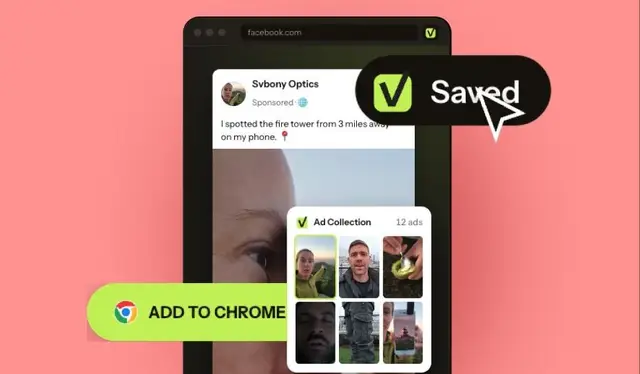
- Proveny for Chrome: The free extension adds a Save button to video ads in the Meta Ad Library, your Facebook feed, Facebook Reels, Instagram and TikTok, and builds a Proveny Facebook clip library in your Ad Collection. Each saved ad keeps its video, copy, landing page link and, for Ad Library ads, its days running; image ads are not saved.
- Ad Breakdown: Proveny's free ad tagging & breakdown tool tags real video ads from other brands second by second: the hook, the format and style, each beat, the set and the sound, with a score and the days the ad has run. You can filter the ads by the format you want to make, break down a video ad from your own Ad Collection, and remake the same recipe with your product in Proveny.
- Video editor: the editor adds a logo, auto captions and AI music or reshoots any single part.
- Where you work: The web app, the Shopify app and Proveny MCP in Claude and ChatGPT all make videos.
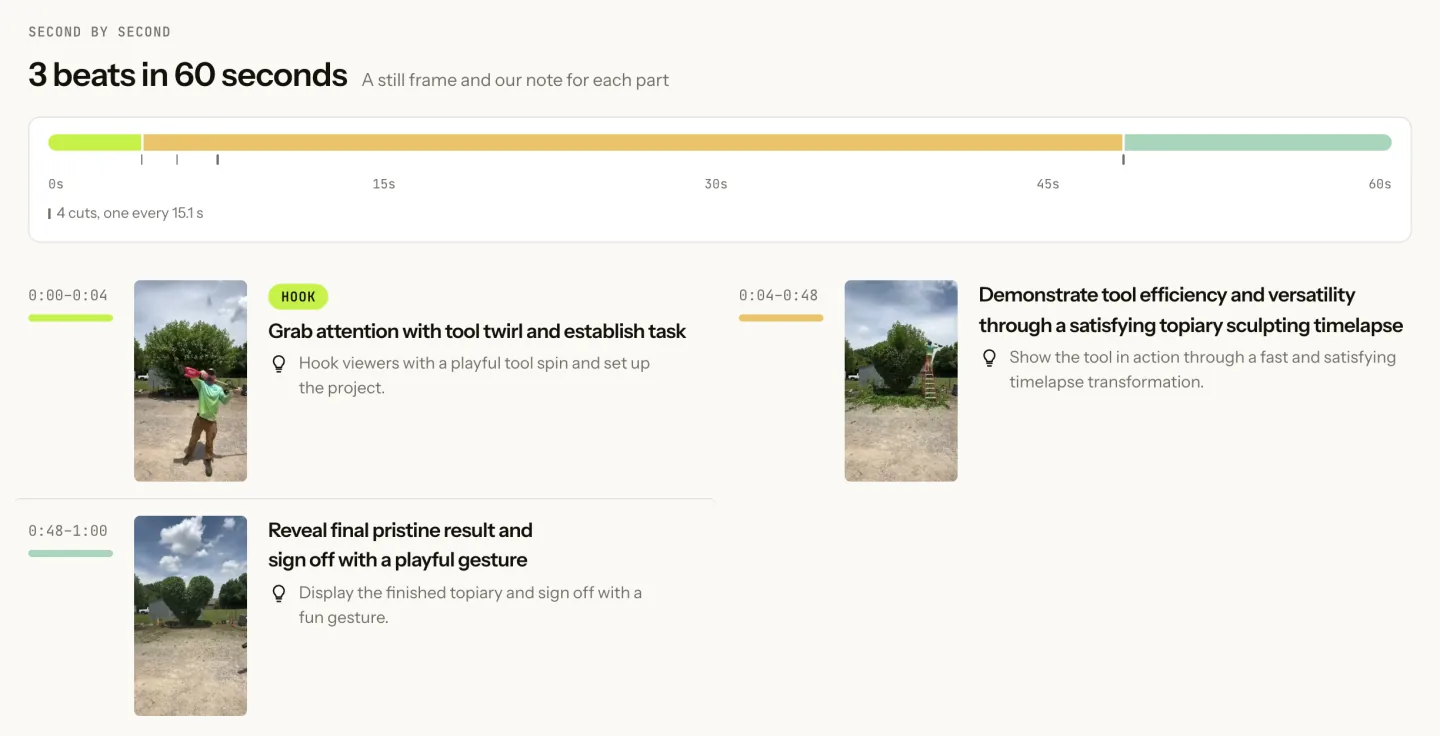
Pricing: Starter $15/month.
Best for: Ecommerce stores that sell physical products, Fiverr and Upwork store builders, agencies and media buyers who need many product video ads to test, especially creatives that show how a product works.
Watch out: Proveny focuses on video ad creation. Its free Ad Breakdown shows why other brands' ads work, but it does not read your own ad account, so you'll still need an analytics tool to track campaign results and see which of your creatives perform best.
2. Motion
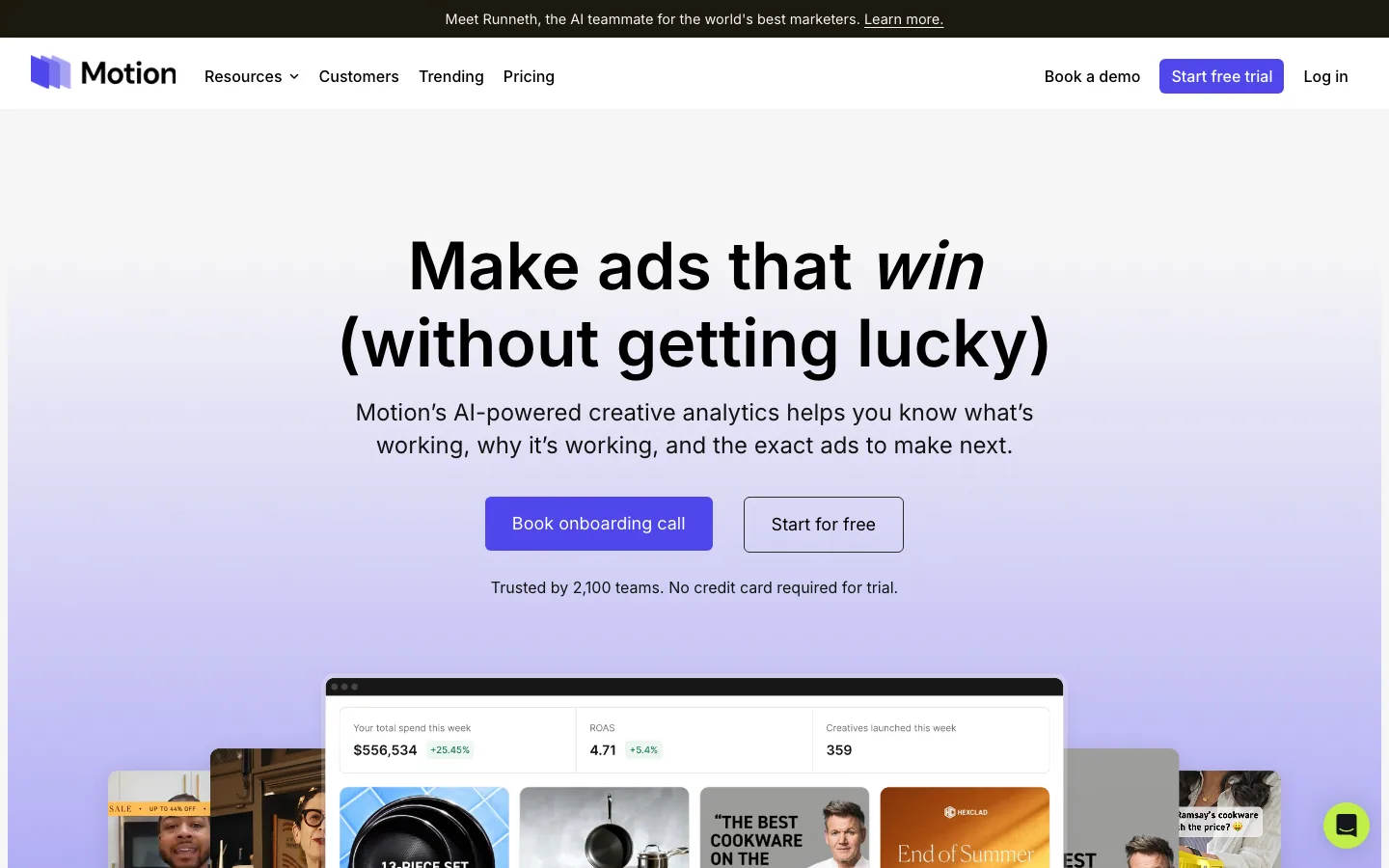
Motion is a creative analytics platform that turns ad account data into visual reports per creative, so a team can compare hooks, formats and angles side by side. Its current plans add an always-on AI analyst that tags every ad and writes reports and briefs.
Key features:
- AI tags and leaderboard: Every creative you have run is watched, tagged and ranked against the others.
- Routines: Daily and weekly reports, iteration finders and alerts arrive without a manual pull.
- Slack and MCP access: Questions asked in Slack return briefs, hooks and reports, and the data is open through MCP.
- Inspiration and benchmarks: Competitor inspiration and benchmarks sit next to your own results.
- Unlimited seats and ad accounts: Teams and agencies add people and accounts without extra fees.
Pricing: Motion starts at $999/month on the Starter plan, which covers up to $50k in monthly ad spend.
Best for: Brands and agencies spending tens of thousands of dollars a month on ads that share creative reports with a team, clients or creators.
Watch out: At $999 a month, Motion only pays off when the ad spend and the number of creatives are large enough to have patterns worth finding.


Drama, UGC or demo ads. Any concept, any product.
Every ad shows your product working accurately.
3. Segwise
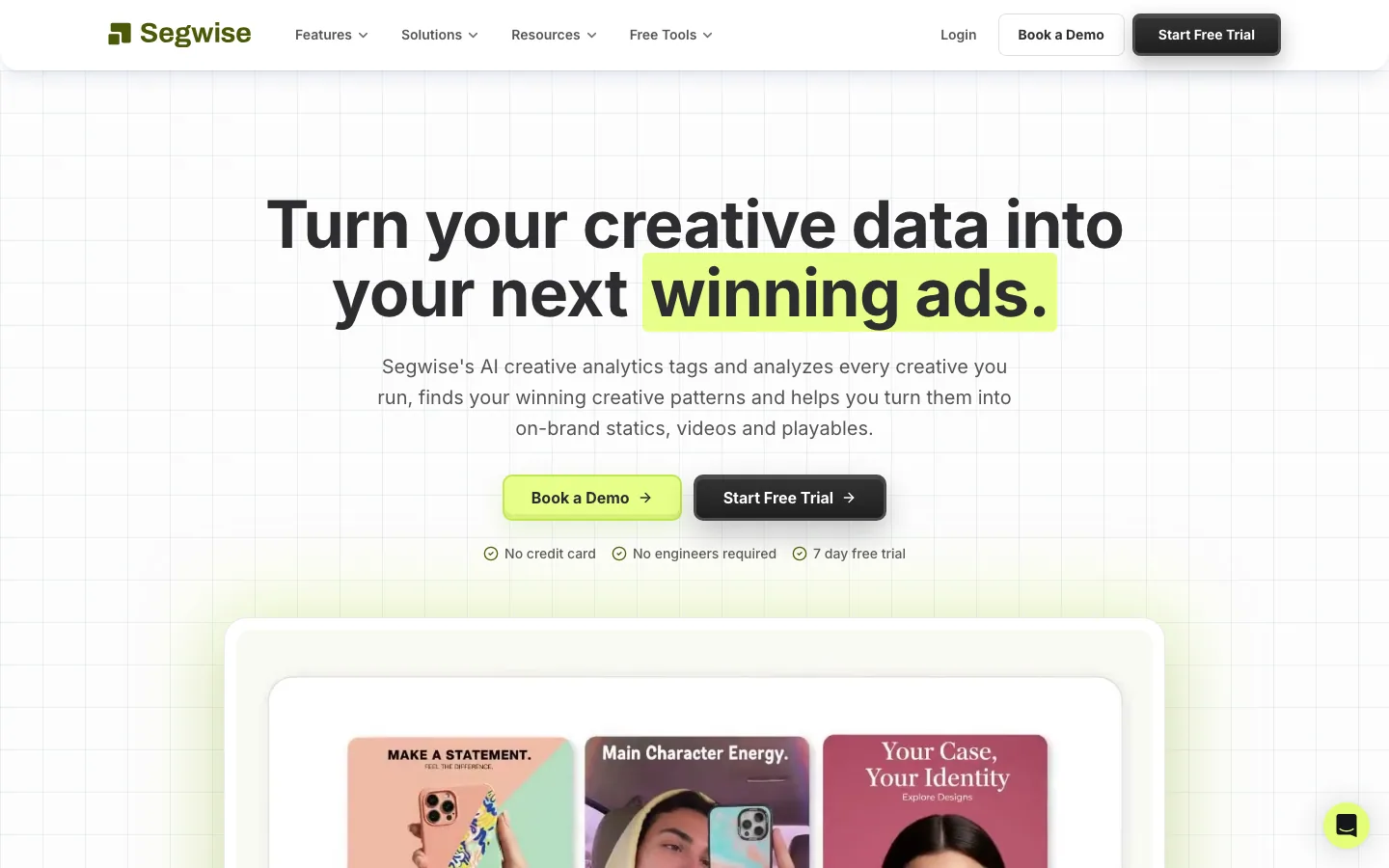
Segwise is a creative intelligence platform that tags creative elements such as hooks, visuals and on-screen text with AI across many ad networks and links those tags to performance. It also generates new static and video ads from the patterns it finds.
Key features:
- AI tagging without manual labels: Creative elements are tagged automatically, so patterns show up without a tagging sheet.
- Fatigue tracking: Fatigue is tracked automatically across every connected ad network.
- Wide network coverage: Meta, Google, TikTok, Unity, AppLovin and other networks connect, plus mobile measurement partners such as AppsFlyer and Adjust.
- Strategy Agent and competitor insights: Analytics, competitor insights and the Strategy Agent are unlimited on every plan.
- Generation tokens: Each plan includes monthly tokens for image and video generation.
Pricing: Segwise starts at $250/month on the Startup plan, which has limited eligibility.
Best for: Mobile app, gaming and multi-network teams that run many creatives and want tags without labelling each ad by hand.
Watch out: Much of the platform is built around app networks and measurement partners, so a store that runs only Meta uses a small part of what it pays for.
4. Atria
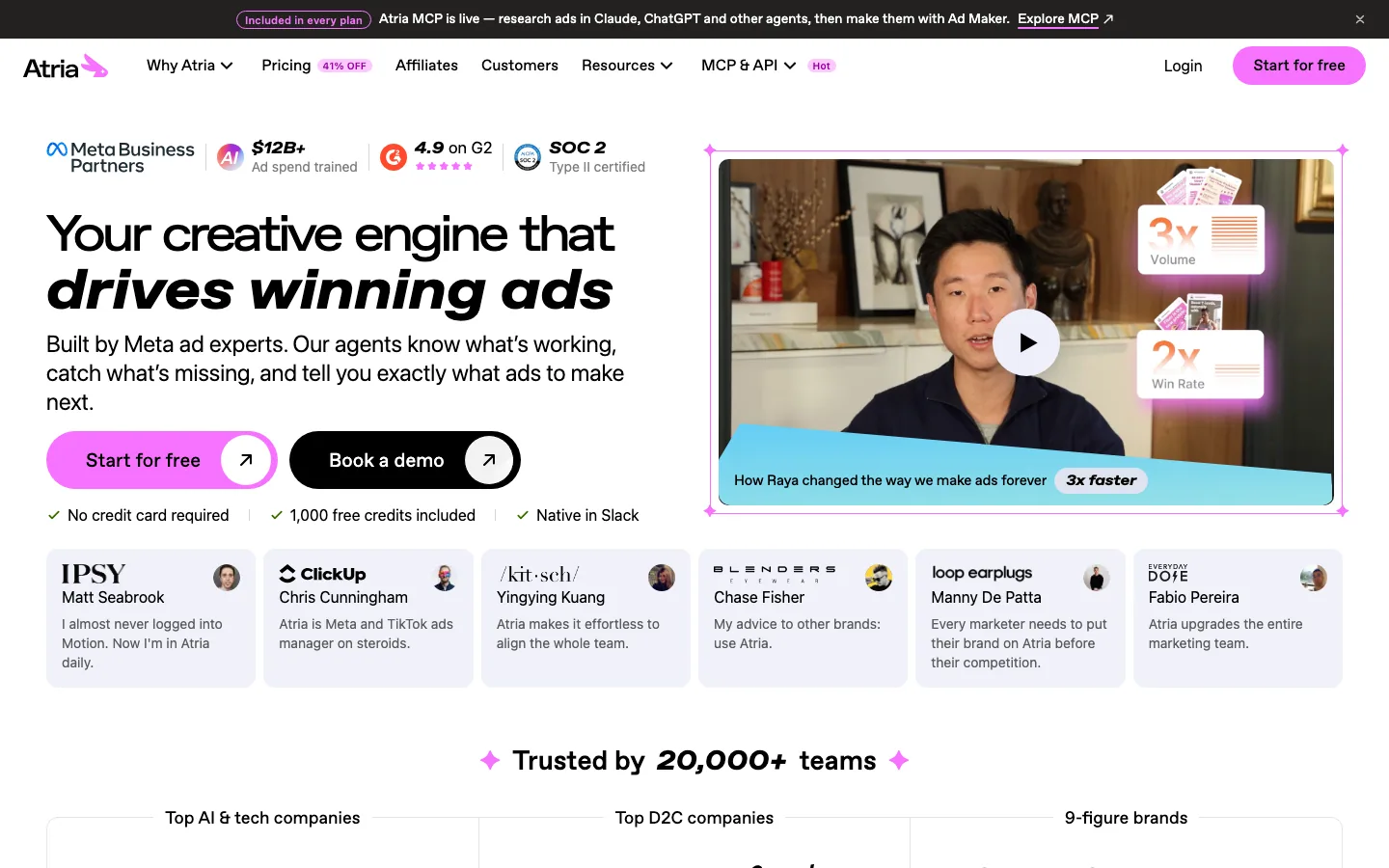
Atria combines competitor ad research, analytics on your own ad accounts and AI tools that write concepts, scripts and ad copy. It suits teams that want research, analysis and briefs in one subscription.
Key features:
- Own-ad analytics: Core connects 5 ad accounts and analyses up to $500K in ad spend a month.
- Competitor tracking: Core follows 50 brands, with more on higher plans.
- Radar: A 24/7 AI strategist watches your accounts and flags what to act on.
- AI briefs: Concepts, scripts, ad copy, image generation, URL analysis and review mining are built in.
- MCP and API: MCP calls and REST API calls are included, with limits on Core.
Pricing: Atria has a free plan, and paid plans start at $159/month, or $129/month billed annually, on the current sale (list price $219).
Best for: Small teams and agencies that want competitor research and their own ad analysis in one place, with AI help on the brief.
Watch out: Both the monthly and annual prices are sale prices right now, so the renewal cost is worth checking before committing.
5. Superads
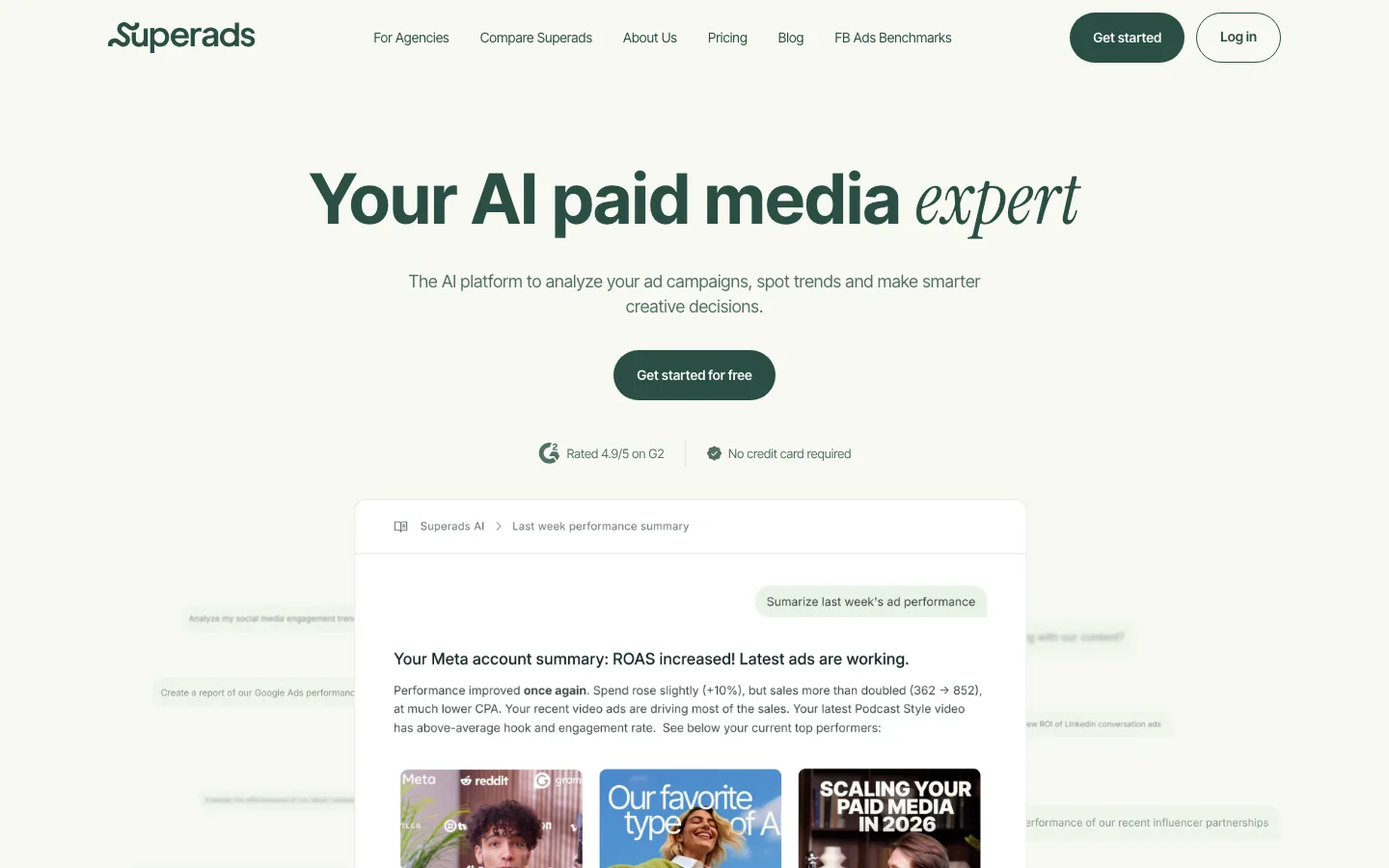
Superads is a creative reporting tool that turns ad account data into reports and boards, with AI tagging and an inspiration library. It is one of the cheaper ways to get creative-level reports.
Key features:
- Unlimited reports and boards: Reports, boards and workflows have no cap on the Professional plan.
- AI tagging: Creatives are tagged by AI, so results group by element.
- Superads AI: An AI assistant answers questions about the data.
- Inspiration: A library of ad inspiration sits next to your reports.
Pricing: Superads starts at $150/month, or $125/month billed yearly.
Best for: Smaller teams that want clean creative reports and AI tags without a four-figure monthly contract.
Watch out: Superads reports on the platform's own numbers, so it shares their attribution limits.
6. Foreplay
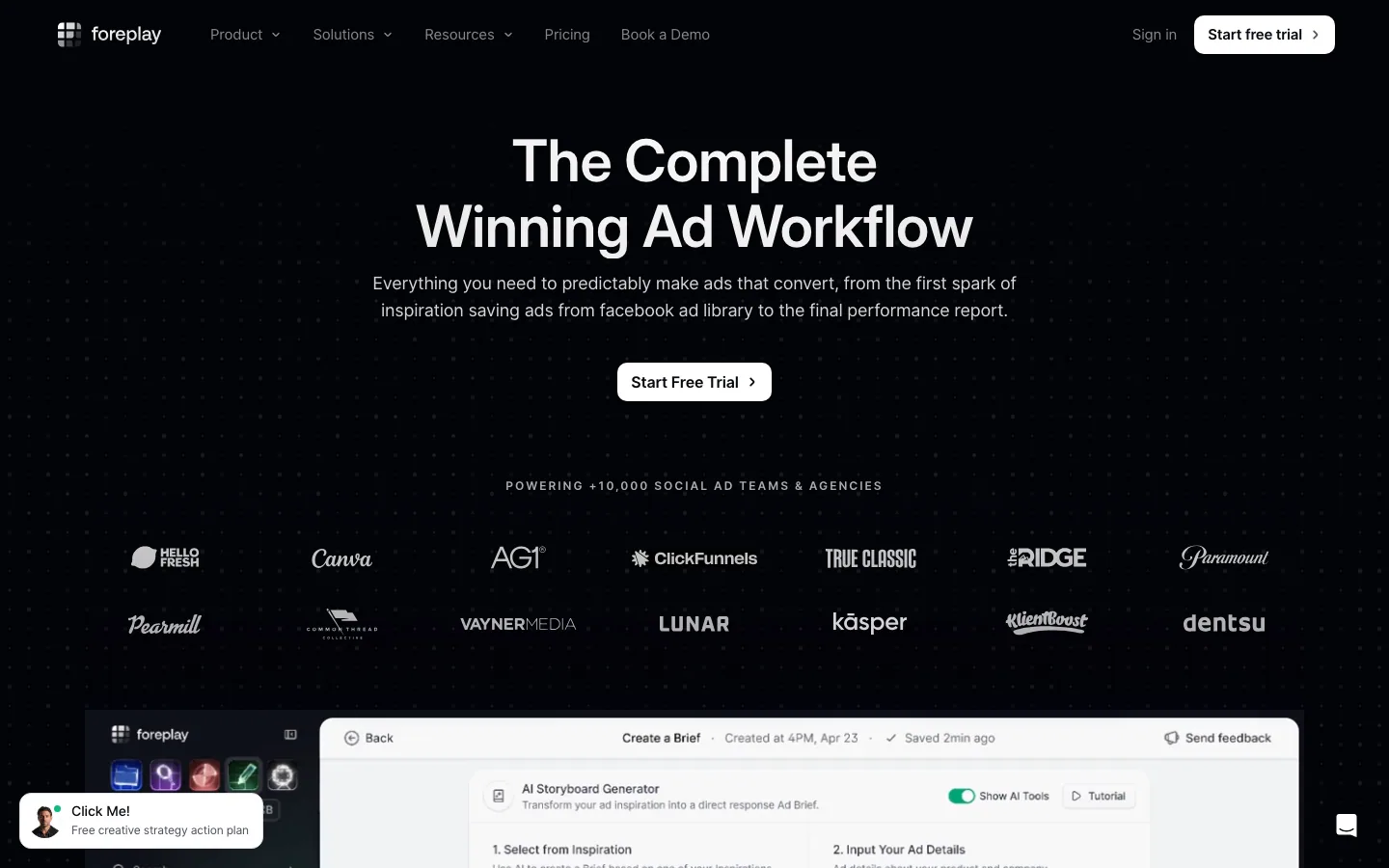
Foreplay is an ad inspiration and research tool: it saves ads into a swipe file, searches a large ad database and turns saved ads into briefs. Higher plans add competitor tracking and analytics on your own ads.
Key features:
- Swipe File: Ads are saved from the Meta Ad Library, Instagram and other places through a Chrome extension or mobile app.
- Discovery: A search covers more than 100 million ads.
- Briefs: Saved inspiration turns into shareable ad briefs.
- Spyder and Lens: Spyder tracks every ad a competitor launches, and Lens connects your Meta and TikTok accounts for creative reports (Workflow plan and up).
- MCP and API: Claude, ChatGPT and other AI tools connect to the data.
Pricing: Foreplay starts at $59/month, or $49/month billed annually.
Best for: Creative strategists and agencies who write a lot of briefs from inspiration and want research and reporting in one tool.
Watch out: Basic covers the swipe file, Discovery search and briefs, but competitor tracking (Spyder) and reports on your own ads (Lens) start at the $175 Workflow plan.
7. Madgicx
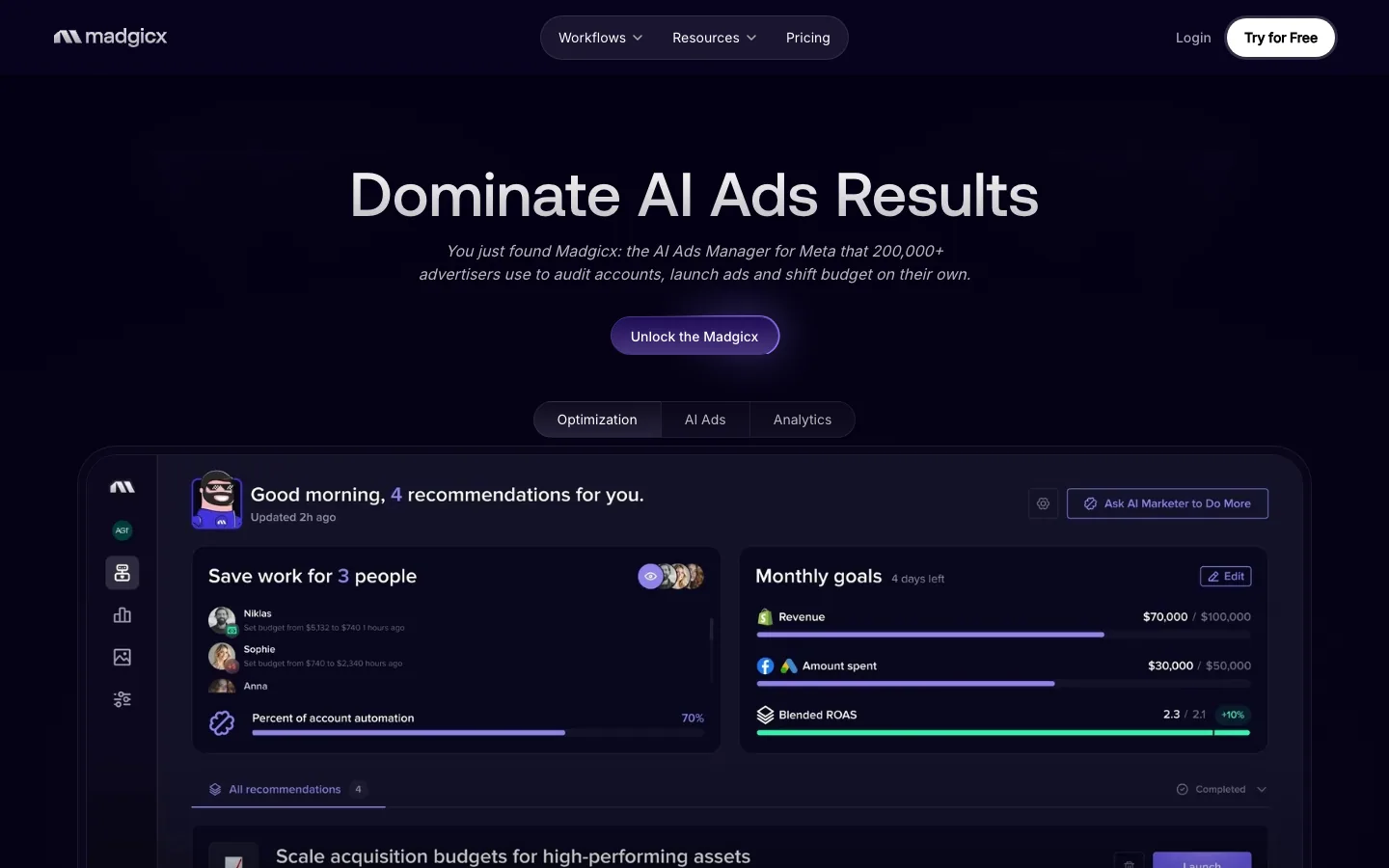
Madgicx is a Meta-focused ad platform that combines analytics, automation, targeting and ad management. It is less a pure creative analysis tool and more a way to act on the data with automation.
Key features:
- One-Click Report: Reports pull in Meta Ads, Google Ads, GA4, Shopify, Klaviyo and TikTok, and share through a public link or PDF.
- Automation: The AI Marketer audits the account and suggests next steps, and automation launches ads and shifts budget.
- Targeting and ad management: Audience and campaign tools sit in the same plan.
- Tracking Pro add-on: Server-to-server tracking for Facebook ads adds first-party conversion data.
Pricing: Madgicx shows no public price; the plan is priced by monthly ad spend and shown inside the app.
Best for: Advertisers who spend mostly on Meta and want reports and automation in one place.
Watch out: The plan price is not public, and automation only helps once you understand your own numbers well enough to judge what it changes.
8. Northbeam
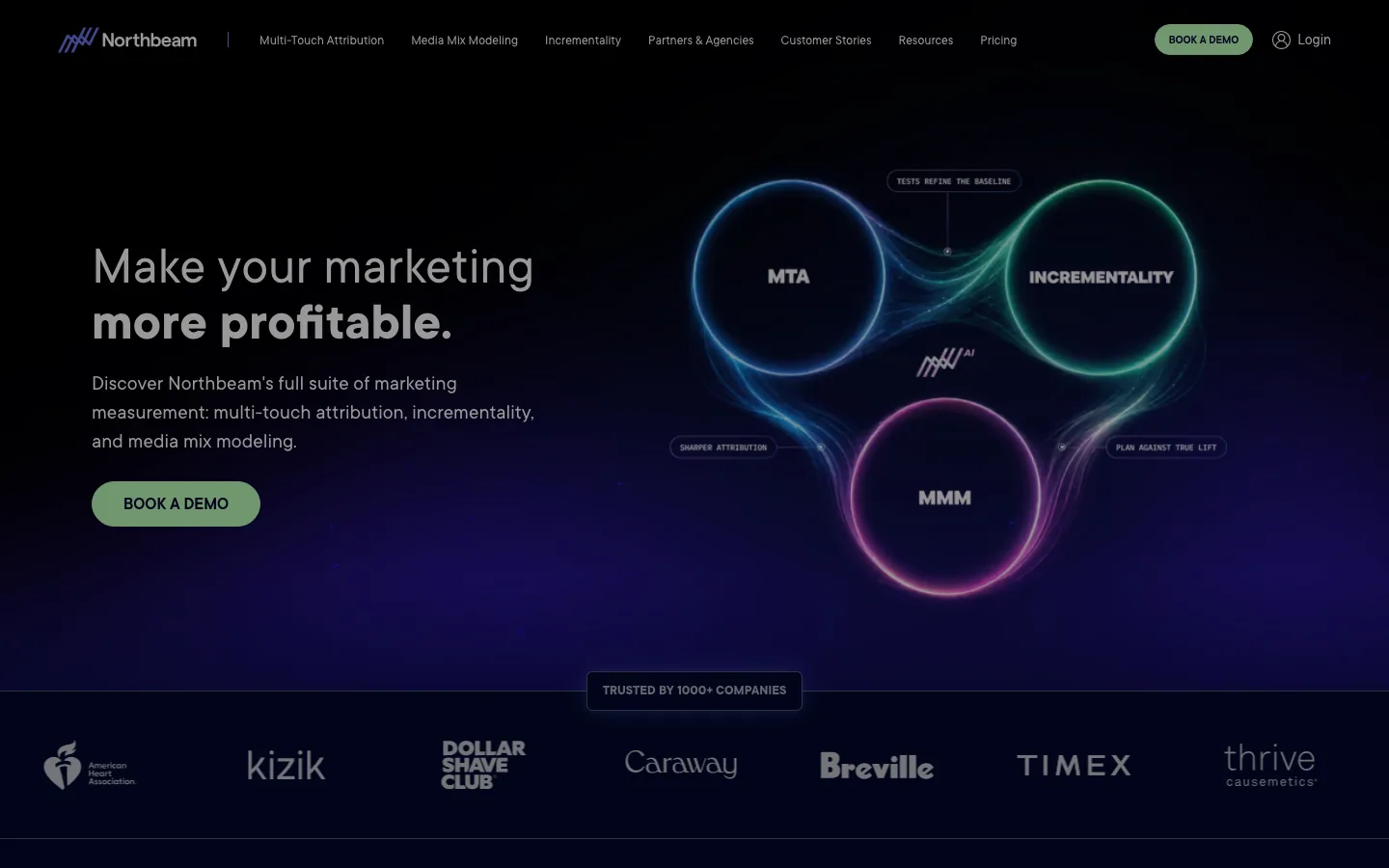
Northbeam is a multi-touch attribution platform that estimates which channel and which ad really drove each sale when Meta, TikTok and Google all claim it. It answers a different question from the creative tools above.
Key features:
- First-party multi-touch attribution: Credit for each sale is split across all your ad channels.
- Omnichannel dashboards: All ads and channels sit in one view.
- View-through credit: Revenue from view-through conversions is attributed with Northbeam C+DV.
- MCP access: The data opens to AI tools through the Northbeam MCP.
Pricing: Northbeam starts at $1,500 on the usage-based Starter plan, and every plan is quoted.
Best for: Brands spending on several channels whose platform reports add up to clearly more sales than the store took.
Watch out: Attribution is a model's estimate, best for splitting budget between channels; for judging one hook against another inside one channel, hook rate and CTR are cleaner. Triple Whale is the other attribution name that comes up often for Shopify brands.
9. Vidmob
Vidmob is an enterprise creative intelligence platform that scores creative against platform specs, brand guidelines and performance across many channels. It comes with a named account manager and analyst briefings.
Key features:
- Pre-Flight Quality: Each asset is checked against platform specs before spend begins.
- Brand Signal: Deviations from brand guidelines show up across every market.
- Performance Intelligence: Creative factors are linked to media results across 13 channels, including Amazon and The Trade Desk.
- AI analyst: An on-platform AI agent answers questions and runs reports on your creative library.
Pricing: Vidmob sells quote-only packages priced per brand by impression volume.
Best for: Large brands and agencies with many markets, many channels and brand rules to enforce.
Watch out: Vidmob is sized for billions of impressions per brand, so it is not a fit for a single store.


Drama, UGC or demo ads. Any concept, any product.
Every ad shows your product working accurately.
10. Meta Ads Manager and the Meta Ad Library
Meta Ads Manager shows results per ad for free, and the Meta Ad Library shows the active ads any page runs. Together they are the baseline every other tool builds on; TikTok Ads Manager and TikTok Creative Center play the same roles on TikTok.
Key features:
- Per-ad results with breakdowns: Placement, age and device breakdowns are one click away.
- Custom metrics: Hook rate and hold rate can be built as custom metrics and saved in a column preset.
- Ad Library: Every active ad a page runs is visible, with its start date.
- Placement view: An ad's average can hide a strong result in Reels and a weak one in Feed, and the breakdown shows it.
Pricing: Both are free; you pay only for the ads you run.
Best for: Every advertiser, as the starting point and the check on every paid tool.
Watch out: Each platform reports only itself with its own way of counting sales, and TikTok counts 2-second and 6-second views, so a TikTok hook rate is not directly comparable with a Meta one.
Final Thoughts
The best ad creative analysis tool is the one that answers the question you have right now. Free reports and a disciplined tag sheet are enough at the start; creative analytics, research and attribution tools earn their cost when a specific question gets too slow to answer by hand.
Whichever tools you pick, the routine matters more than the software: read each ad as a funnel, look for patterns across fixed tags, and end every week with two or three new creatives that each change one thing. Proveny is built for that last step.
 HC
Written by
Founder of Proveny & TrueProfit
Harry Chu has spent 11 years in eCommerce doing the work behind the growth: running ads, testing creatives, reading the numbers, and scaling his own Shopify stores to 7 figures. He knows a good-looking ad account doesn’t mean much if the store isn’t growing.
Harry is the founder of Proveny and TrueProfit. On the Proveny blog, he shares what he’s learned from building and scaling his own stores: what to test, what the results actually mean, and when it’s time to stop spending on an idea that isn’t working.
No magic formula. No advice from the sidelines. Just practical lessons from someone who has had to make the numbers work in his own business.
More lessons from Harry